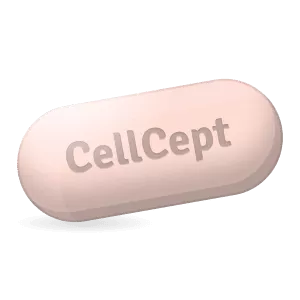
CellCept
SKU: TM-1070
Active ingredient: Mycophenolate Mofetil
CellCept (mycophenolate mofetil) is immunosuppressant used primarily to prevent organ rejection in adults and children (1 year or older) who have received a kidney, heart, or liver transplant. It is taken in combination with other medicines, such as cyclosporine and corticosteroids, to reduce the activity of the immune system.
Total
100 in stock
 Worldwide delivery in 5-14 days
 Money-back guarantee
 Discreet packaging
 Secure payments
Product description
Common use
CellCept is used to prevent organ rejection in patients who are at least three months of age who have received a liver transplant, a heart transplant, or a kidney transplant. CellCept weakens your body's immune system, to help keep it from "rejecting" a transplanted organ. Organ rejection happens when the immune system treats the new organ as an invader and attacks it.
Dosage and direction
Take CellCept exactly as prescribed by your doctor. Take oral CellCept on an empty stomach, at least 1 hour before or 2 hours after a meal. Swallow the capsule or tablet whole and do not crush, chew, break, or open it. Tell your doctor if you have trouble swallowing a tablet or capsule.
Precautions
Cellcept can cause a miscarriage or birth defects when used during pregnancy. Both men and women should use effective birth control to prevent pregnancy during and shortly after treatment with CellCept. You should not breastfeed while using CellCept.
Using CellCept may increase your risk of cancer, serious infections, or kidney transplant failure. Talk with your doctor about the risks and benefits of CellCept.
Contraindications
You should not use CellCept if you are allergic to mycophenolate mofetil, mycophenolic acid, or polysorbate 80.
Stop using CellCept and call your doctor at once if you have ever had: a stomach ulcer or problems with digestion, diabetes; hepatitis B or C or other viral infection (may become active or get worse while you are using CellCept); phenylketonuria, or PKU (the liquid form of this medicine may contain phenylalanine); or a rare inherited enzyme deficiency such as Lesch-Nyhan syndrome or Kelley-Seegmiller syndrome.
Possible side effect
Common CellCept side effects may include: stomach pain, nausea, vomiting, diarrhea, constipation, swelling in your ankles or feet, rash, pain anywhere in your body; headache, dizziness, tremors, fever, sore throat, cold symptoms, or other signs of infections; or abnormal blood tests, high blood sugar, high or low blood pressure, fast heart rate.
Drug interaction
If you take sevelamer or an antacid, take your oral CellCept dose 2 hours before you take these other medicines.
Tell your doctor about all your current medicines. Many drugs can affect CellCept, especially: azathioprine, cholestyramine; antiviral medicine - acyclovir, ganciclovir, valacyclovir, valganciclovir; an antibiotic - amoxicillin, ciprofloxacin, metronidazole, norfloxacin, rifampin, sulfa drugs; or a stomach acid reducer - esomeprazole, lansoprazole, omeprazole, Nexium, Prevacid, Prilosec, Protonix, and others.
Missed dose
Use the medicine as soon as you can, but skip the missed dose if your next dose is due in less than 2 hours. Do not use two doses at one time.
Overdose
Seek emergency medical attention.
Storage
Store at room temperature away from moisture and heat. Keep away from children and pets.