Dymista
SKU: TM-1073
Active ingredient: Azelastine, Fluticasone Propionate
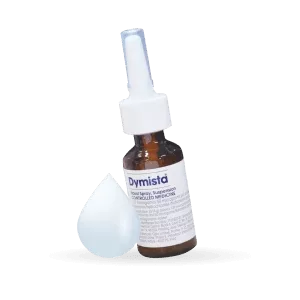
Dymista (azelastine and fluticasone) is a nasal spray used to treat moderate-to-severe allergic rhinitis (hay fever) and rhino-conjunctivitis in adults and children. It combines an antihistamine and a steroid to rapidly relieve nasal symptoms like congestion, sneezing, runny nose, itchy and watery eyes.
Total
100 in stock
 Worldwide delivery in 5-14 days
 Money-back guarantee
 Discreet packaging
 Secure payments
Product description
Common use
Dymista nasal spray is used to treat nasal symptoms such as congestion, sneezing, and runny nose caused by seasonal allergies. Dymista nasal spray contains a combination of azelastine and fluticasone. Azelastine is an antihistamine that reduces the effects of natural chemical histamine in the body. Histamine can produce symptoms of sneezing, itching, watery eyes, and runny nose. Fluticasone is a steroid that prevents the release of substances in the body that cause inflammation.
Dosage and direction
Use Dymista exactly as prescribed by your doctor. Shake the medicine bottle gently just before each use. Avoid getting Dymista in your eyes or mouth. If the medicine gets in your eyes, rinse with water for 10 minutes and then call your doctor. Usual Adult Dose for Allergic Rhinitis: 1 spray in each nostril twice a day.
Precautions
To make sure Dymista is safe for you, tell your doctor if you have ever had: sores or ulcers inside your nose; an injury of or surgery on your nose; chickenpox or measles; tuberculosis or any other infection or illness; herpes infection of your eyes; or glaucoma or cataracts.
It is not known whether Dymista will harm an unborn baby. Tell your doctor if you are pregnant or plan to become pregnant. Using azelastine and fluticasone nasal while you are breast-feeding may cause your breast milk to taste bitter.
Contraindications
You should not use Dymista if you are allergic to azelastine (Astelin, Astepro, Optivar) or fluticasone (Advair, Cutivate, Flovent, Flonase, Veramyst), or if you are also taking ritonavir (Norvir, Kaletra).
Possible side effect
Common Dymista side effects may include: headache; nosebleeds; or altered sense of taste.
Drug interaction
Using Dymista with other drugs that make you drowsy can worsen this effect. Ask your doctor before using opioid medication, a sleeping pill, a muscle relaxer, or medicine for anxiety or seizures.
Tell your doctor about all your other medicines, especially: ritonavir (Norvir, Kaletra); or antifungal medicine - fluconazole, itraconazole, ketoconazole.
Missed dose
Use the medicine as soon as you can, but skip the missed dose if it is almost time for your next dose. Do not use two doses at one time.
Overdose
An overdose of Dymista is not expected to be dangerous. Seek emergency medical attention if anyone has accidentally swallowed the medication.
Storage
Store Dymista nasal spray in an upright position at room temperature. Do not freeze or refrigerate. Keep away from children and pets.