Micogel
SKU: TM-1164
Active ingredient: Miconazole
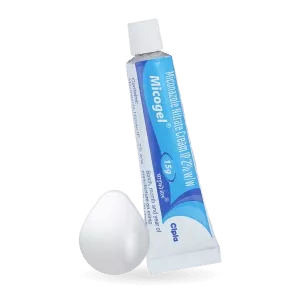
Micogel cream (Miconazole) is a topical antifungal agent used to treat skin infections such as athlete’s foot (tinea pedis), jock itch (tinea cruris), ringworm, and cutaneous candidiasis (yeast infections). It works by inhibiting the growth of fungi and yeast, relieving symptoms like itching, redness, burning, and skin peeling.
Total
100 in stock
 Worldwide delivery in 5-14 days
 Money-back guarantee
 Discreet packaging
 Secure payments
Product description
Common use
Micogel cream is an antifungal medication used to treat a variety of fungal skin infections. Containing Miconazole, it belongs to the imidazole class of medicines and works by disrupting the cell membranes of fungi, effectively stopping their growth and preventing them from spreading. It is a versatile treatment commonly used for conditions such as ringworm, jock itch, athlete’s foot, cutaneous candidiasis, and pityriasis versicolor (a condition that causes patches of skin discoloration).
Dosage and direction
Ensure that the affected skin areas are clean and thoroughly dry before application. Gently massage the cream into your skin until it's fully absorbed. Remember to wash your hands immediately after applying, unless your hands are being treated. It's recommended to apply the cream twice daily, in the morning and evening or as advised by the doctor. For best results, keep using for 2 to 4 weeks even if symptoms improve earlier. If there's no improvement within 4 weeks or if your condition worsens, consult your doctor.
Precautions
In individuals living with liver disease, using Micogel cream should be done cautiously as it could exacerbate their condition. If you have severely damaged skin or open wounds, avoid applying Micogel cream as it could potentially worsen your condition. This medicine can be used during pregnancy and breastfeeding when prescribed by your doctor.
Contraindications
Micogel is contraindicated in patients with known allergies to miconazole and in patients with liver problems and infants under 4 months.
Possible side effect
Micogel cream may cause side effects such as burning sensation, skin rash, redness, itching, stinging, dryness, peeling, or allergic contact dermatitis. These effects are usually mild, but if severe irritation or blistering occurs, discontinue use and consult your doctor.
Drug interaction
Micogel cream interacts with the following medicines: When used in conjunction with Micogel cream, anticoagulants such as warfarin may increase an individual's risk of bleeding; The use of Micogel alongside antiepileptics like phenytoin might heighten the risk of phenytoin toxicity; Medicines such as metformin or gliclazide, when taken alongside Micogel cream, may have their blood glucose-lowering effect intensified.
Missed dose
If you forget to apply Micogel cream at the scheduled time, apply it as soon as you remember. If it's nearly time for your next application, skip the missed one and continue with your regular schedule. Do not increase your dosage without consulting your doctor.
Overdose
In case you apply more Micogel cream than recommended, there may not be serious consequences as overdosing is unlikely with topical applications. However, if you notice any unusual symptoms or discomfort, inform your doctor.
Storage
Keep Micogel cream stored below 25°C in a cool and dry place. Avoid exposure to direct sunlight or heat. Ensure the tube is tightly closed when not in use. Keep it out of reach and sight of children and pets.