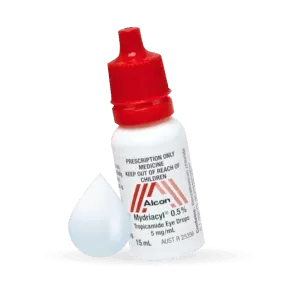
Mydriacyl
SKU: TM-1143
Active ingredient: Tropicamide
Mydriacyl (tropicamide) is an eye drop used to dilate (widen) the pupil and relax the eye muscles, known as inducing mydriasis and cycloplegia. It is Primarily used by eye care professionals to facilitate comprehensive eye examinations, such as retinal exams, or before eye surgeries.
Total
100 in stock
 Worldwide delivery in 5-14 days
 Money-back guarantee
 Discreet packaging
 Secure payments
Product description
Common use
Mydriacyl (for the eyes) is used to dilate the pupil for an eye examination or other diagnostic procedure. Mydriacyl (Tropicamide) causes muscles in the eye to become relaxed. This dilates (widens) the pupil so that it does not react (narrow) when your doctor shines an examination light into your eye.
Dosage and direction
Do not take by mouth. Mydriacyl is for use only in the eyes. Do not use this medicine while wearing contact lenses. Mydriacyl may contain a preservative that can discolor soft contact lenses. It may be best to wait until your eyes are no longer dilated before putting in your contact lenses. Wash your hands before and after using the eye drops.
To apply the eye drops: Tilt your head back slightly and pull down your lower eyelid to create a small pocket. Hold the dropper above the eye with the tip down. Look up and away from the dropper and squeeze out a drop. Close your eyes for 2 or 3 minutes with your head tipped down, without blinking or squinting. Gently press your finger to the inside corner of the eye for 1 to 3 minutes, to keep the liquid from draining into your tear duct.
Precautions
To make sure Mydriacyl is safe for you, tell your doctor if you have: glaucoma; or any drug allergies.
It is not known whether this medicine will harm an unborn baby. Tell your doctor if you are pregnant.
It is not known whether tropicamide ophthalmic passes into breast milk or if it could harm a nursing baby. Tell your doctor if you are breast-feeding a baby.
Contraindications
You should not use Mydriacyl if you are allergic to it.
Protect your eyes from bright light while your pupils are dilated.
Possible side effect
Common side effects of Mydriacyl may include: blurred vision; mild stinging of the eyes; your eyes may be more sensitive to light; dry mouth; or headache.
Drug interaction
It is not likely that other drugs you take orally or inject will have an effect on tropicamide used in the eyes. But many drugs can interact with each other. Tell your doctor about all your current medicines and any you start or stop using, especially glaucoma medication.
Missed dose
Since Mydriacyl is usually given only during an eye exam, it is not likely that you will be on a dosing schedule. If you are on a schedule, apply the missed dose as soon as you remember. Skip the missed dose if it is almost time for your next dose. Do not use extra medicine to make up the missed dose.
Overdose
An overdose of tropicamide ophthalmic is not expected to be dangerous. Seek emergency medical attention, if anyone has accidentally swallowed the medication.
Storage
Store at room temperature away from moisture and heat. Do not freeze. Keep the bottle tightly closed when not in use. Keep away from children and pets.