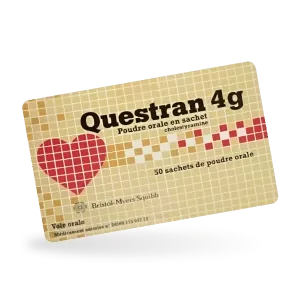
Questran
SKU: TM-1173
Active ingredient: Cholestyramine
Questran (cholestyramine) is a bile acid sequestrant used primarily to lower high LDL ("bad") cholesterol levels. It is also used to treat itching caused by bile duct blockages and to manage diarrhea related to gallbladder removal or bowel disease. It works by binding bile acids in the intestine, causing them to be excreted.
Total
100 in stock
 Worldwide delivery in 5-14 days
 Money-back guarantee
 Discreet packaging
 Secure payments
Product description
Common use
Questran is used to lower high levels of cholesterol in the blood, especially low-density lipoprotein (LDL) ("bad" cholesterol). Questran is also used to treat itching caused by a blockage in the bile ducts of the gallbladder.
Dosage and direction
Use the medicine exactly as directed. Although Questran is usually taken once or twice per day, Questran may be taken up to 6 times per day. Carefully follow your doctor's dosing instructions. Mix the Questran sachets powder with at least 2 to 6 ounces of water or other non-carbonated beverage. You may also mix the powder with a brothy soup, crushed pineapple, or applesauce. Drink extra fluids to prevent constipation while you are taking Questran.
Precautions
Tell your doctor if you have ever had: chronic constipation; a thyroid disorder; diabetes; kidney disease; liver disease; or coronary artery disease (clogged arteries).
This medicine may contain phenylalanine. Talk to your doctor before using Questran if you have phenylketonuria (PKU). Tell your doctor if you are pregnant or breastfeeding.
Contraindications
You should not use Questran if you are allergic to it, or if you have a blockage in your biliary tract. You should not use Questran if you have a blockage in your stomach or intestines.
Possible side effect
Common side effects of Questran may include: mild constipation, diarrhea; stomach pain, nausea, loss of appetite; bloating or gas; irritation of your tongue; or itching or irritation around your rectal area.
Drug interaction
Tell your doctor about all your current medicines. Many drugs can affect Questran, especially: birth control pills or hormone replacement therapy; digoxin (digitalis); a diuretic or "water pill"; penicillin G; phenobarbital; phenylbutazone; propranolol; spironolactone; tetracycline; thyroid medication such as levothyroxine; or warfarin (Coumadin, Jantoven).
Missed dose
Take the medicine as soon as you can, but skip the missed dose if it is almost time for your next dose. Do not take two doses at one time.
Overdose
Seek emergency medical attention. Overdose symptoms may include severe stomach pain or constipation.
Storage
Store at room temperature away from moisture and heat. Keep away from children and pets.